

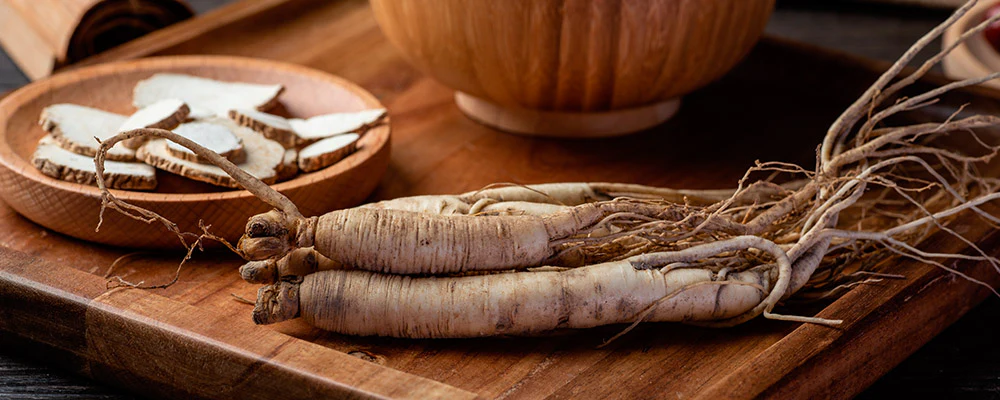
Discover the skincare benefits of ginseng, who should use it, potential side effects, ingredient pairings, and the best ginseng products.
Ginseng has been used in traditional East Asian medicine for centuries, but today it has become one of the most studied botanical ingredients in skincare. Rich in antioxidant compounds called ginsenosides, ginseng is valued for its ability to support the skin barrier, improve hydration, defend against environmental stress, and promote a healthier-looking complexion.
Unlike trend-driven ingredients that quickly disappear from the market, ginseng has maintained its popularity thanks to growing scientific interest and its compatibility with most skin types.
This guide explains what ginseng is, how it works, who benefits most from it, what ingredients pair well with it, and how to choose products formulated with effective concentrations.
What Is Ginseng in Skincare?
Ginseng is a botanical extract derived from the root of Panax ginseng. Rich in naturally occurring compounds called ginsenosides, it is widely used in skincare for its antioxidant properties and its ability to support healthier-looking skin.
Modern formulations often include ginseng root extract, ginseng root water, or fermented ginseng to help improve hydration while protecting skin from environmental stressors.
| Ingredient | Main Function |
|---|---|
| Panax Ginseng Root Extract | Antioxidant support |
| Ginseng Root Water | Hydration |
| Ginsenosides | Protect against oxidative stress |
| Red Ginseng Extract | Supports skin vitality |
Benefits Backed by Research
Research suggests that ginseng may support skin health in several ways, although results depend on the overall formulation and concentration used.
| Benefit | Scientific Evidence | Strength of Evidence |
|---|---|---|
| Antioxidant protection | Multiple laboratory studies demonstrate antioxidant activity. | ★★★★☆ |
| Supports skin barrier | Early clinical and laboratory evidence. | ★★★☆☆ |
| Improves hydration | Clinical cosmetic studies show increased moisture. | ★★★★☆ |
| Helps reduce visible signs of aging | Promising evidence but more long-term studies are needed. | ★★★☆☆ |
| Brightens dull skin | Limited but encouraging evidence. | ★★☆☆☆ |
Editor’s Note: While laboratory research on ginseng is promising, many skincare studies evaluate complete formulations rather than ginseng alone. Results can vary depending on the product and your skin type.
Who Should Avoid Ginseng?
Ginseng is generally considered a well-tolerated skincare ingredient and is suitable for most skin types, including normal, dry, combination, and mature skin. Unlike stronger active ingredients, it is not commonly associated with irritation when used in well-formulated cosmetic products.
However, as with any botanical extract, individual reactions are still possible.
You may want to introduce ginseng products gradually or perform a patch test before full application if you:
- Have a known allergy to botanical or plant-derived ingredients.
- Experience frequent irritation or allergic reactions when trying new skincare products.
- Have a compromised skin barrier caused by excessive exfoliation or the overuse of active ingredients.
- Are using products formulated with high concentrations of fragrance, essential oils, or exfoliating acids that may increase skin sensitivity.
It’s also worth remembering that irritation is often caused by the complete formulation rather than ginseng itself. Preservatives, fragrance, alcohol, or other active ingredients are more commonly responsible for adverse reactions than the botanical extract.
If you have highly reactive skin or an existing skin condition, introducing one new product at a time makes it easier to identify how your skin responds.
Ingredients That Pair Well With Ginseng
One of the reasons ginseng remains a popular skincare ingredient is its versatility. Because its primary role is to provide antioxidant support and help protect the skin from environmental stress, it can be incorporated into many different routines without conflicting with most commonly used ingredients.
Some of the best ingredient pairings include:
Niacinamide
Niacinamide complements ginseng by helping improve the appearance of uneven skin tone while supporting the skin barrier. Together, they create a balanced routine focused on hydration, brightness, and resilience.
Ceramides
Since ginseng helps defend the skin against environmental stressors, combining it with ceramides supports the skin barrier from another angle by reducing moisture loss and reinforcing barrier function.
Hyaluronic Acid
Ginseng and hyaluronic acid work particularly well together for dehydrated skin. While hyaluronic acid attracts and retains moisture, ginseng contributes antioxidant protection and helps maintain healthier-looking skin over time.
Peptides
Peptides focus on supporting the skin’s structural proteins, while ginseng helps protect the skin from oxidative stress. Their complementary roles make them a common pairing in products designed for mature skin.
Vitamin C
Vitamin C and ginseng both provide antioxidant benefits, although they work through different mechanisms. When formulated well, they can help improve radiance while protecting the skin from environmental damage.
Common Myths About Ginseng
Although ginseng has been used in skincare for centuries, several misconceptions continue to circulate online.
Myth: Ginseng is only for mature skin.
False. While many luxury anti-aging products feature ginseng, the ingredient is not limited to mature skin. Its antioxidant properties can benefit adults of almost any age by helping protect the skin from daily environmental stress before visible signs of aging become more apparent.
Myth: Ginseng can replace retinol.
False. Ginseng and retinoids serve very different purposes.
Retinoids remain one of the most extensively researched ingredients for improving acne, fine lines, and photoaging. Ginseng, on the other hand, primarily provides antioxidant protection and supports healthier-looking skin. The two ingredients can complement one another but should not be viewed as interchangeable.
Myth: Higher concentrations always mean better results.
Not necessarily. The effectiveness of a skincare product depends on far more than a single percentage.
The quality of the botanical extract, extraction method, ingredient stability, formulation, and the presence of complementary ingredients all influence how a product performs. A thoughtfully formulated product with a moderate amount of ginseng may deliver better results than a poorly formulated product containing a higher concentration.
Recommended Ginseng Skincare Products
If you’re ready to incorporate ginseng into your skincare routine, the following products feature the ingredient in well-formulated essences and serums. Each recommendation has been selected based on its formulation, ingredient profile, and suitability for different skin types.
| Product | Category | Best For |
|---|---|---|
| Beauty of Joseon Ginseng Essence Water | Essence | Hydration, dull skin, and a radiant-looking complexion. |
| Sooryehan The Black Serum | Serum | Best for antioxidant care and elasticity. |
| TOSOWOONG Ginseng Plus Retinal Eye Serum | Eye serum | Fine lines and nourishing eye care. |
| MISSHA Chogongjin Youngan Jin Cream | Cream | Best for rich overnight nourishment. |
Editor’s Note: We’re gradually publishing in-depth reviews for every product featured on The Kaia Edit. As reviews become available, each product name will link to its full review, where you’ll find ingredient analysis, texture, performance, and recommendations for different skin types.
Frequently Asked Questions
Can I use ginseng every day?
Yes. Most skincare products containing ginseng are formulated for daily use and can typically be applied in both morning and evening routines. Always follow the manufacturer’s directions and introduce new products gradually if you have sensitive skin.
Can I combine ginseng with vitamin C?
Yes. Ginseng and vitamin C are generally compatible and complement one another by providing antioxidant protection against environmental stress. Many routines incorporate both ingredients without issue.
Is ginseng suitable for sensitive skin?
In many cases, yes. Ginseng itself is not considered a highly irritating ingredient and is often well tolerated. However, people with sensitive skin should consider the complete formulation, paying particular attention to fragrance, essential oils, and alcohol. Performing a patch test before regular use remains the safest approach.
Further Reading
- Best Ginseng Skincare Products for Healthy, Radiant Skin (The Edit)
- Vitamin C for Skin: Benefits, Different Forms, and How to Use It (Ingredients)
- Beauty of Joseon Ginseng Essence Water Review (Review)
- Why Traditional Ingredients Still Matter (Journal)
References
- American Academy of Dermatology Association. Skin Care Basics.
- Journal of Ginseng Research. Research on Panax ginseng, ginsenosides, and skin physiology.
- International Journal of Molecular Sciences. Reviews on the antioxidant and anti-aging properties of ginseng.
- Molecules. Studies investigating the biological activity of Panax ginseng in cosmetic formulations.
- National Center for Biotechnology Information (NCBI). Research on botanical extracts and skin health.
- Baumann L. Cosmetic Dermatology: Principles and Practice.