

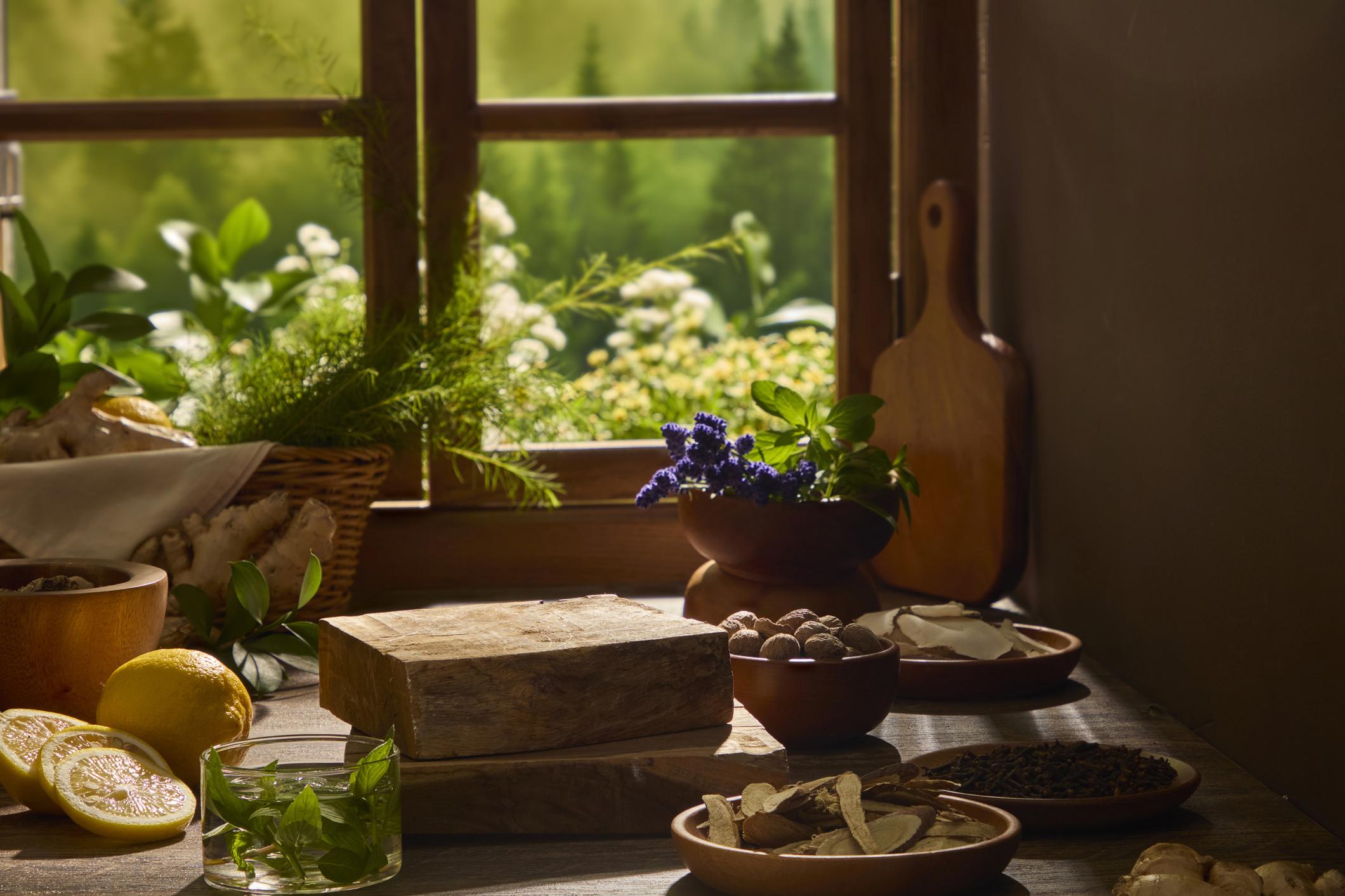
Long before skincare became an industry driven by constant launches and viral trends, people around the world relied on plants, roots, minerals, and fermented ingredients to care for their skin. Today, many of those same ingredients continue to appear in modern formulations—not because of nostalgia, but because time has shown that some ideas are worth preserving.
Reading time: 8 min
In an Industry Obsessed with What’s Next
The beauty industry has always celebrated innovation. Every year introduces new technologies, improved delivery systems, and ingredients that promise to transform the way we care for our skin. Scientific research continues to expand our understanding of skin biology, allowing brands to formulate products that are increasingly sophisticated and enjoyable to use.
Innovation has undoubtedly improved skincare.
Yet alongside this constant pursuit of the next breakthrough, another pattern quietly repeats itself. Ingredients that have existed for centuries continue to return to the conversation. Ginseng, green tea, rice, licorice root, mugwort, and fermented botanicals regularly appear in new launches, despite being anything but new.
At first glance, this may seem contradictory. Why would an industry so focused on innovation repeatedly look back to ingredients with such long histories?
The answer is surprisingly simple.
An ingredient doesn’t remain relevant for generations by accident. While tradition alone should never be considered proof of effectiveness, centuries of continued use often suggest that an ingredient is worth studying more closely. Modern research can then investigate its chemical composition, identify active compounds, and evaluate how it interacts with the skin.
Rather than competing with science, tradition often provides the starting point for scientific curiosity.
Tradition and Science Are Part of the Same Conversation
Traditional medicine and modern dermatology are sometimes presented as opposing worlds—one rooted in history, the other in laboratories. In reality, the relationship between them is often far more collaborative than it appears.
Many botanical ingredients first became part of everyday rituals because generations observed their effects long before the scientific tools existed to explain them. Today, researchers are able to isolate compounds, evaluate antioxidant activity, study anti-inflammatory mechanisms, and better understand how these ingredients may support the skin barrier or protect against environmental stress.
Ginseng illustrates this relationship particularly well.
For centuries, it has occupied an important place in East Asian traditions, where it was valued as a symbol of vitality and resilience. Contemporary cosmetic research has since explored many of its bioactive compounds, examining their antioxidant properties and their potential role in supporting healthier-looking skin.
Science does not validate tradition simply because it is old.
Instead, it asks an important question: Which traditional observations continue to hold true when tested through modern research?
Sometimes the answer is more nuanced than marketing would suggest, but it often reveals that historical knowledge and scientific evidence are not as far apart as we imagine.
Why Some Ingredients Continue to Return
Every year introduces dozens of ingredients that briefly dominate headlines before gradually disappearing from conversations. Others quietly remain, becoming part of the foundation of skincare rather than the trend cycle.
This difference is rarely explained by marketing alone.
Ingredients that survive decades—or even centuries—usually possess qualities that allow them to adapt to changing formulations and evolving scientific understanding. They are versatile, compatible with different skin concerns, and capable of fitting into routines without relying on novelty to justify their existence.
Their longevity also creates something increasingly rare within the beauty industry: familiarity.
Consumers may not always recognize the science behind ingredients like ginseng or green tea, but they recognize that these names have remained present through changing generations of products. That familiarity creates trust—not blind trust, but a willingness to continue learning about ingredients that have consistently earned attention over time.
Longevity, however, should never be confused with perfection.
No ingredient works for everyone, and no botanical deserves praise simply because it has a long history. Traditional ingredients should be evaluated with the same curiosity and critical thinking as newer innovations.
Perhaps the most valuable skincare ingredients aren’t the newest or the oldest—they’re the ones that continue to prove their relevance as our understanding of skin evolves.
Looking Beyond the Language of Trends
One of the challenges of modern skincare is the speed at which information spreads. A single clinical study can become a headline, while a handful of social media videos can transform a relatively unknown ingredient into the industry’s newest obsession. In this environment, conversations often become simplified, and ingredients are quickly labeled as miracle, must-have, or game-changing, even though skincare rarely works in such absolute terms.
Instead of asking whether an ingredient is simply trending, it is often more valuable to understand why it was included in a formula, how it interacts with the other ingredients, whether meaningful research supports its use, and whether the formulation makes sense as a whole. These questions encourage a more thoughtful way of evaluating skincare products, shifting the focus from marketing claims to formulation quality and evidence.
Ultimately, no single ingredient exists in isolation. A good product is rarely defined by one hero ingredient alone, but by the way every component works together to create a balanced, well-formulated product that meets the needs of the skin.
What Ginseng Represents

Among traditional skincare ingredients, ginseng has become more than a botanical extract. It represents an interesting bridge between cultural heritage and contemporary cosmetic science.
Its continued presence in skincare is not simply the result of history. Advances in extraction methods, formulation technology, and ingredient stability have allowed brands to incorporate ginseng into products that feel increasingly refined while preserving the characteristics that made the ingredient valuable in the first place.
This balance between respecting tradition and embracing innovation is perhaps one of the most compelling aspects of modern skincare.
Rather than replacing older ingredients with newer alternatives, formulators increasingly explore how established botanicals can work alongside peptides, ceramides, niacinamide, and other well-studied ingredients.
Innovation, in this sense, becomes an extension of tradition rather than its replacement.
Choosing Products with Perspective
At The Kaia Edit, we don’t believe products deserve attention simply because they’re new, nor do we believe traditional ingredients deserve admiration simply because they’ve existed for centuries.
Both perspectives miss what matters most.
The value of a product lies in the quality of its formulation, the evidence supporting its ingredients, and its ability to become part of a routine that people can realistically maintain over time.
Thoughtful skincare isn’t about rejecting innovation or romanticizing the past.
It’s about remaining curious enough to appreciate both.
When we evaluate products, we hope to look beyond launch dates, popularity, and marketing language. We are more interested in understanding whether an ingredient continues to earn its place—not only in scientific literature, but also in everyday routines.
Final Thoughts
The beauty industry will continue to change. New discoveries will reshape formulations, technologies will improve, and fresh ingredients will capture our attention.
That progress is worth celebrating. But progress doesn’t always require leaving the past behind.
Sometimes the most meaningful innovations come from looking again at ingredients that have quietly accompanied generations before us, asking better questions, and understanding them with greater depth than ever before.
Perhaps that is what makes traditional ingredients so enduring. Not that they resist change, but that they continue to evolve alongside it.
Further Reading
- Ginseng for Skin: Benefits, Uses & How It Works (Ingredients)
- Best Ginseng Skincare Products for Healthy, Radiant Skin (The Edit)
- Beauty of Joseon Ginseng Essence Water Review (Reviews)
References
- American Academy of Dermatology Association. Skin Care Basics.
- Baumann L. Cosmetic Dermatology: Principles and Practice.
- Draelos ZD. Cosmetic Dermatology: Products and Procedures.
- Journal of Ginseng Research. Bioactive Components and Dermatological Applications of Panax Ginseng.
- Journal of Cosmetic Dermatology. Selected publications on botanical ingredients and skin aging.